











Revenue automation is the practice of using software to run the repeatable work that turns prospects into pipeline — researching and qualifying people, creating outreach, launching multi-channel campaigns, and following up — with less manual grind and clearer control.
In 2026, that no longer means a chain of disconnected tools. Strong teams treat revenue as one connected motion: qualify → create → reach, with humans approving what matters.
Why this matters now
Buyers don’t move in a straight line. They read content, check LinkedIn, ignore half your emails, click an ad weeks later, and only then book a meeting. Sales and marketing still often work in silos: one team enriching lists, another writing copy, another running sequences, and nobody owning the full loop.
The cost shows up as:
- Hours spent researching the same types of accounts
- Campaigns that feel generic because personalization doesn’t scale
- Follow-up that slips when calendars fill up
- Tools that sync data but don’t move work forward
Revenue automation exists to close that gap — not by replacing your team, but by removing the busywork that keeps them from selling and messaging well.
Revenue automation vs. marketing automation vs. sales automation
These terms get mixed together. A clean distinction helps buyers — and search engines — alike.
| Term | What it usually covers | Where it falls short alone |
|---|---|---|
| Marketing automation | Email journeys, nurturing, scoring, ads | Often stops at “engaged” — not full reach across channels with sales context |
| Sales automation | Sequences, dialers, CRM tasks | Often skips deep qualification and content creation |
| Revenue automation | End-to-end: qualify prospects, create campaigns, execute outreach, follow up | Needs connected data and clear human approval, or it becomes noise |
Bottom line: Marketing and sales automation are pieces. Revenue automation is the system that connects them so signals become action — and action becomes pipeline.
What good revenue automation actually does
Ignore vendor buzzwords for a moment. A useful revenue automation setup helps your team do five things well:
1. Enrich and qualify prospects with insights and signals
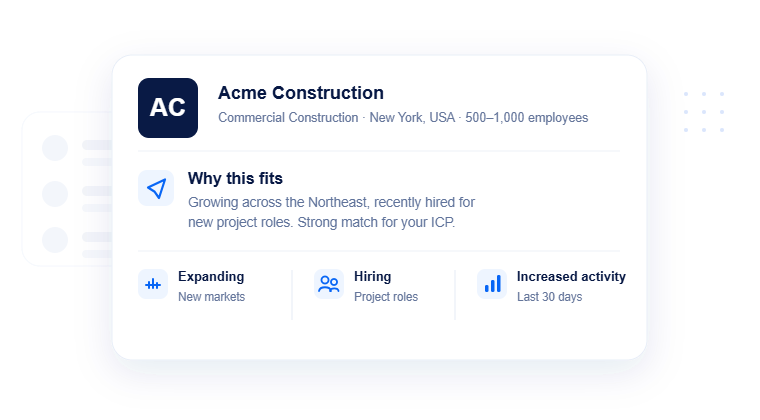
Not every contact deserves equal time. Automation should surface who fits, why now, and how to approach — using insights and buying signals, not a raw list dump.
2. Know the best way to target them
Channel choice matters. Email, LinkedIn, Meta, and other surfaces work differently. Automation should recommend a path based on context, not blast every channel the same way.
3. Create personalized content at speed
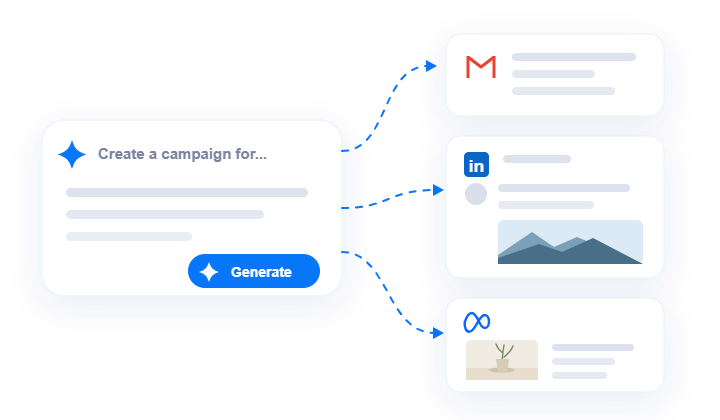
The grind isn’t “having ideas.” It’s turning insight into usable email, social, and ad copy for dozens of accounts. Automation should draft; your team should refine and approve.
4. Run multi-channel campaigns from one workflow
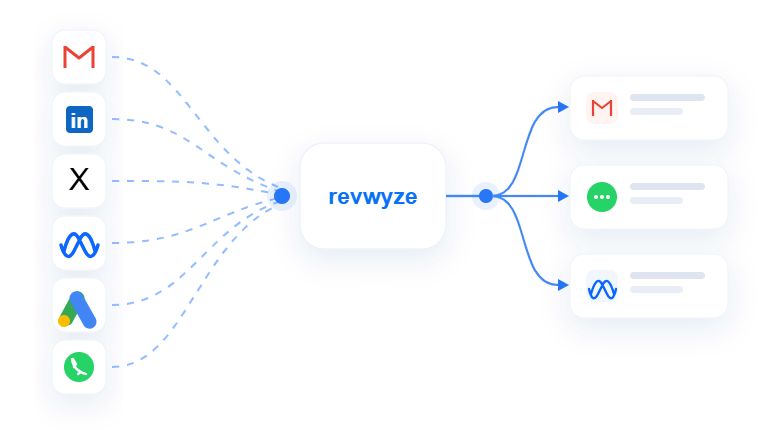
When tools don’t talk, context dies. Revenue automation keeps qualify → create → reach in one connected flow so campaigns don’t restart from scratch in every app.
5. Follow up without losing the human touch
Autonomous where it should be. Human where it matters. Your team should still approve sends, own relationships, and decide when to push or pause.
That last point is the difference between helpful automation and spam at scale.
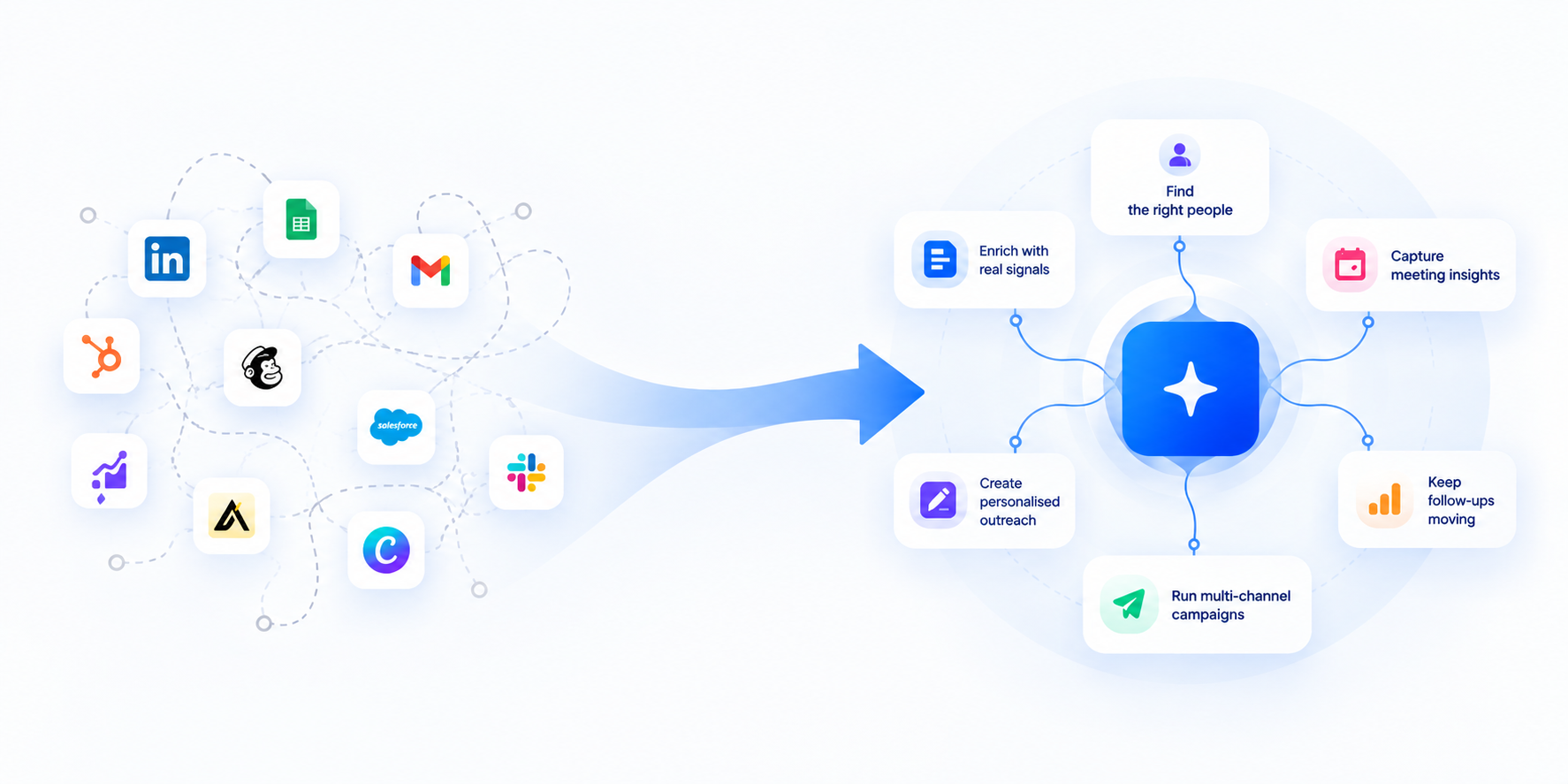
What is an autonomous revenue execution platform?
An autonomous revenue execution platform is software that doesn’t only report on revenue work — it helps execute it.
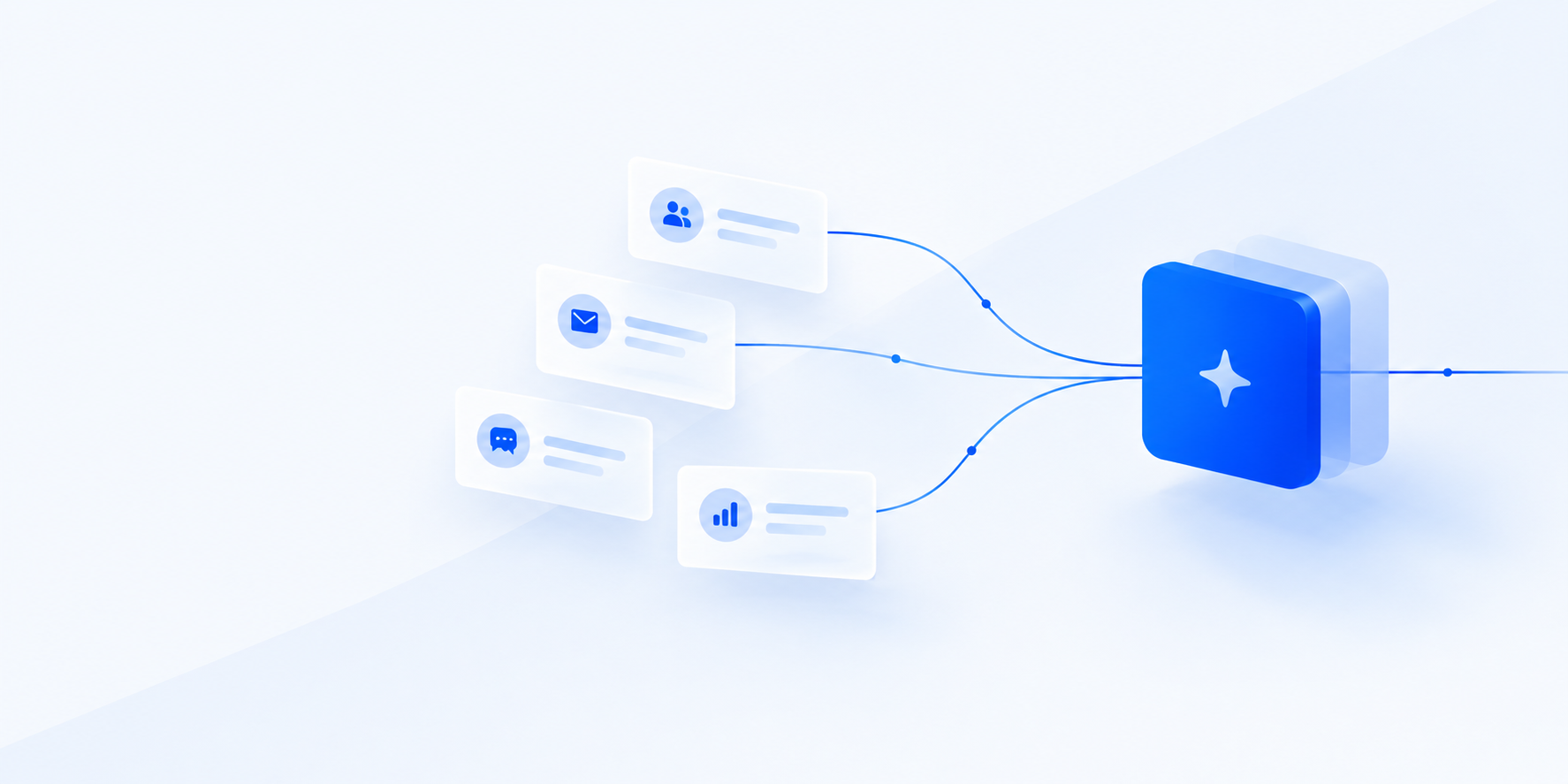
Revwyze is an autonomous revenue execution platform that helps sales and marketing teams enrich and qualify prospects with insights and signals, know the best way to target them, create personalized content, run multi-channel campaigns, and follow up — in one connected system.
In practice, that means:
- Qualify — focus on people worth your time
- Create — turn insight into campaigns without the grind
- Reach — meet buyers where they already are
- Stay in control — approve what goes out
If you’ve outgrown a pile of point tools but don’t want a black-box “AI SDR” that sends without oversight, this is the category to evaluate.
Signs your team is ready for revenue automation
You’re likely ready if two or more of these sound familiar:
- Founders or lean GTM teams are still doing research and first-touch by hand
- Campaigns take days to launch because copy, lists, and channels live in different places
- You have enrichment tools and sequencing tools, but the handoff is manual
- Pipeline depends on heroics, not a repeatable motion
- You want more outreach without hiring a bigger stack of specialists
You are not ready if you have no ICP, no offer clarity, or no one to approve outbound. Automation amplifies what you already have — including confusion.
How to evaluate a revenue automation platform
Use this checklist when comparing vendors or building an internal stack:
- Does it help qualify, not just contact? Enrichment + signals beat bigger lists.
- Can it create as well as send? Drafting personalized multi-channel content matters.
- Is execution multi-channel? Email alone is not a modern revenue motion.
- Do humans approve sends? Non-negotiable for brand risk and compliance.
- Does it connect to tools you already use? Workspace, channels, ads, scheduling — not another silo.
- Is pricing usage-based or seat-taxed? Small teams get hurt by per-seat fees.
- Can you measure time and pipeline? Not vanity activity.
Revwyze is built around that checklist: credit-based plans, team allowances included, integrations into your existing stack, and human approval on outreach. See Pricing, Integrations, and Startups if you’re evaluating fit.
Common mistakes to avoid
- Automating bad lists — speed without qualification burns domains and trust.
- Channel sprawl without a system — more tools ≠ more revenue.
- “Set and forget” sending — buyers notice lazy personalization.
- Measuring opens instead of meetings and pipeline — activity theater.
- Buying AI that removes judgment — keep approval in the loop.
Quick FAQ
What is revenue automation in one sentence?
It’s using connected software to qualify prospects, create campaigns, run multi-channel outreach, and follow up — so sales and marketing spend less time on grind and more time on judgment.
Is revenue automation only for enterprise?
No. Lean and startup teams often benefit first because they can’t hire a specialist for every step of the motion.
Does revenue automation replace SDRs or marketers?
No. It removes research, drafting, and coordination busywork so people can do higher-value work: conversations, strategy, and creative decisions.
How is this different from an AI writing tool?
Writing tools draft text. Revenue automation connects qualification, content, channels, and follow-up in one workflow — with approval before send.
Where should a team start?
Clarify ICP, connect the stack you already use, automate qualify → create → reach for one narrow use case, measure meetings and pipeline, then expand.
Start executing revenue — not just planning it
If your team is stuck between too many tools and too little pipeline motion, revenue automation is the upgrade path. The goal isn’t more automation for its own sake. It’s a system that helps you qualify prospects, create campaigns, and reach every channel — while you stay in control.